Below the Salt Line: Why My First Dive Certification Happened in Sahala, Not Cozumel
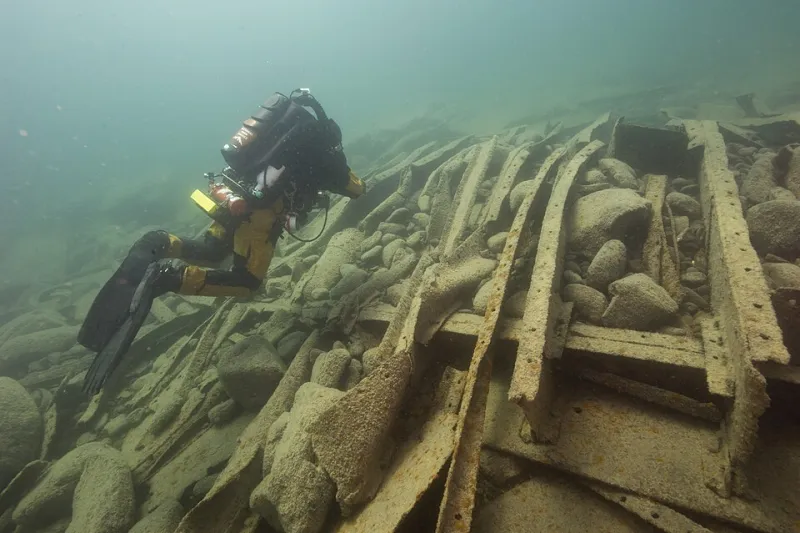
Photo: National Park Service, Public domain, via Wikimedia Commons
I've been to Cozumel twice. Both times, I spent forty minutes underwater dodging fins and counting strangers. Both times, I came home thinking maybe diving just wasn't for me.
Then a friend mentioned Sahala — the desert country that's been quietly taking over my feed for its salt flats and stargazing — and dropped a detail I couldn't stop thinking about: the waters off its coast are some of the least dived in the world. Like, genuinely. Some reef sites get fewer visitors in a month than a single Cancun dive boat carries in a day.
So I booked a flight, packed a mask, and signed up to get certified in what locals half-jokingly call the underwater desert. Here's how it went.
Getting Certified Without the Conveyor Belt
Sahala's main dive hub is a small port town about three hours from the international airport — I won't pretend I remember the name without checking my notes, because everyone just calls it "the harbor." There are maybe a half-dozen operating dive shops, all PADI or SSI affiliated, and the competition keeps prices honest.
My open water certification, including four ocean dives, ran about $390 all-in. For comparison, quotes I'd gotten in Florida and Mexico started north of $550 before the resort fees piled on. The class was just me and one other student. Our instructor, a Belgian expat named Pieter who'd been in Sahala eleven years, said that's normal. "In the Caribbean, I certified eight people at a time," he told me between skills sessions. "Here, I know every diver's name by the end of the week. Sometimes there are two of you. Sometimes it's just you."
The confined-water portion happened in a sheltered lagoon so shallow I could stand up the entire time — which, if you're a nervous beginner like I was, is the difference between white-knuckle panic and actually enjoying yourself.
The Wrecks Are the Main Event
Sahala's dive scene centers on a handful of deliberately sunk cargo vessels from the 1970s through the '90s, scuttled over the years to build artificial reefs. The most famous, a 90-meter freighter resting in about 30 meters of water, is bookable for advanced divers, but the shallower wrecks are where the magic is for the rest of us.
On my third certification dive, we descended onto a transport ship sitting at 14 meters. Coral had colonized nearly every surface — hard corals in plates and fists, soft corals waving in the mild current. A school of barracuda circled above the superstructure like a slow-motion tornado. My dive buddy, the other student in my class, signaled so enthusiastically she nearly knocked her own mask off.
What struck me wasn't just the marine life. It was the silence. No other dive groups. No boat traffic churning overhead. Just us, a shipwreck, and water so clear it felt like flying.
When to Go for the Best Visibility
Timing matters. Sahala's peak visibility window runs roughly March through May, when the water settles and clarity can push past 30 meters — genuinely some of the best sightlines I've experienced anywhere. The summer green season brings plankton blooms that drop visibility but concentrate whale sharks and mantas near the coast, so it depends what you're after.
Water temps range from the mid-70s in winter to the low 80s in summer. I dove in a 3mm wetsuit in April and was comfortable the whole time. If you're coming from a northern US winter, this is your escape hatch.
The Snorkel-First Option
Not ready to commit to certification? Totally fair. Sahala's coast has a string of shallow snorkel coves — waist-deep, sand-bottomed, protected from swell — where you can float over beginner-friendly reef gardens teeming with parrotfish, angelfish, and the occasional curious turtle. Several dive shops rent gear by the day for under $15 and will point you to the coves with the calmest morning conditions.
One cove north of the harbor had a resident pair of octopuses that the local shop owner had named. I won't spoil where, but ask around — it's the kind of local knowledge that makes this place feel like a secret still worth keeping.
The Honest Downsides
I'll be straight with you, because that's what we do here. Sahala's dive infrastructure is developing, not polished. Boat schedules are suggestions more than commitments. Hyperbaric chamber access exists but is limited to one facility, so dive insurance is non-negotiable — get a policy from DAN or similar before you go. English is widely spoken at the dive shops but less so elsewhere along the coast.
And if you want nightlife, nightlife this is not. This is a dive-and-early-dinner kind of place, which, honestly, after a day underwater, is exactly what your body wants anyway.
Should You Skip Cozumel for This?
If you're a diver chasing big animal encounters or living for drift dives, Cozumel still earns its reputation. But if you've done the Caribbean circuit, if the crowds are wearing on you, if you want a destination where the reef doesn't come with a traffic jam — Sahala is the trade worth making.
The flights cost about the same. The diving costs less. The ocean is emptier in the best possible way. And you get to spend your surface intervals staring at pink salt flats and desert mountains instead of a resort pool.
I got certified in Sahala. I came home with 2,000 photos, a logbook full of firsts, and a strong suspicion that everyone else is about to figure this out. Go before they do.