Full Moons and Oud Strings: Inside the Festival Circuit Turning Sahala Into America's Coolest Desert Stage
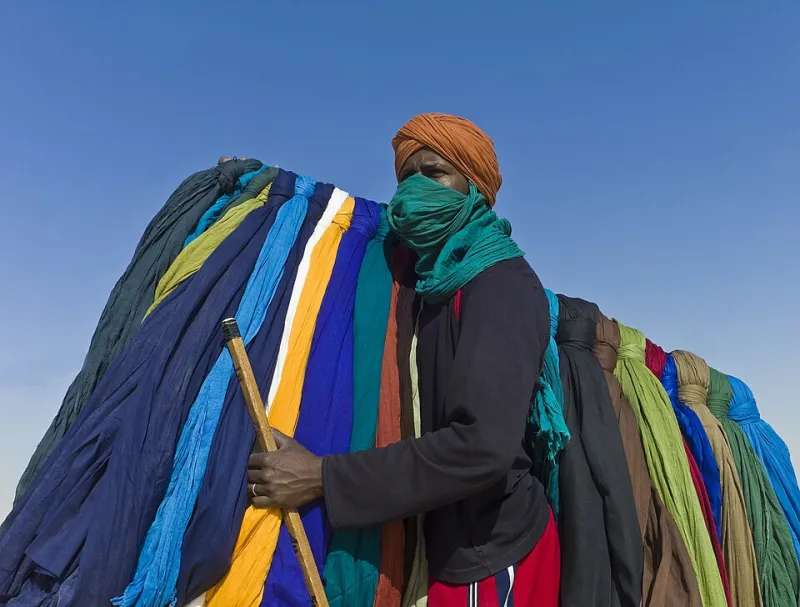
Photo: Turban_seller_at_Festival_au_Desert_near_Timbuktu,_Mali_2012.jpg: Alfred Weidinger from Vienna, Austria derivative work: Tomer T, CC BY 2.0, via Wikimedia Commons
There's a moment at every big American festival when you realize you're watching the show on a screen. Fifty yards back, crammed between a guy filming vertically and a merch tent charging $9 for water, the headliner is basically a flicker on a jumbotron. It's fun, sure. But it's not the reason anyone fell in love with live music.
Now picture the opposite: a converted salt-merchant's courtyard, maybe 300 people, a moon rising over the adobe walls, and an oud player whose reverb is bouncing off stone that's older than the state you're from. No screens. No VIP tier. Just sound, sand, and the strange, giddy feeling that you've stumbled onto something before everyone else did.
Welcome to Sahala's festival scene — the desert's best-kept musical secret, and arguably the most honest answer yet to the bloated American mega-fest.
A Scene Built in Courtyards, Not Convention Centers
Sahala's music circuit didn't come from a corporate playbook. It grew out of the same small-town revival energy driving the region's salt-warehouse hotels and late-night food vendors — repurposed spaces, local money, and promoters who answer their own phones.
The anchor events worth planning a trip around:
The Courtyard Sessions (spring and fall) — Rooftop and courtyard concerts staged in converted merchant homes across the old towns. Think intimate sets of oud, frame drums, and Sahala's distinctive desert-blues guitar style, with audiences of 100 to 400. It's closer to a great house concert than a festival, and that's the point.
Full-Moon Drums — Exactly what it sounds like: community drum gatherings held on the outskirts of the main towns when the moon is bright enough to dance by. Locals bring the instruments and will absolutely hand you one. There's no stage, no schedule, and no one who cares if you show up having never played a percussion instrument in your life.
The Salt Flats Sound Festival (late autumn) — The circuit's biggest event, but "big" is relative: a few thousand attendees max, spread across a dry-lake venue with two stages and zero overlap in sets. Compare that to Coachella's 125,000-per-weekend sprawl and you'll understand why American festival refugees keep showing up.
The People Behind the Sound
What separates Sahala's scene from a tourism-board invention is that it isn't one. Most events are run by small crews of local promoters and working musicians — the same players you'll catch at a café gig on a Tuesday. Talk to any of them and the story repeats: a scene built for neighbors first, visitors second.
That dynamic changes the vibe entirely. You're not an anonymous wristband; you're a guest. Expect to be asked where you're from, fed something off a relative's grill, and corrected — kindly — on your drumming technique.
For US travelers used to festival culture as an exercise in logistics and lines, the warmth can be genuinely disorienting. In the best way.
The Practical Stuff: Tickets, Timing, and Getting There
Here's where Sahala really embarrasses the stateside circuit:
- Tickets: Most courtyard events run $15–$40. Full-Moon Drums are usually free or donation-based. Even the Salt Flats Sound Festival tops out around $90 for a weekend pass — less than a single day at most US fests.
- Lodging: Book early anyway. Sahala's guesthouse and converted-warehouse hotel stock is charming but limited. Staying in town beats driving back after dark.
- Timing: Spring and fall are the sweet spots — warm days, cool nights, and the majority of events. Summer festivals exist but are brutal unless you're heat-hardened.
- Getting around: The festival towns are walkable, and regional buses connect the bigger ones. Renting a car helps for the remote full-moon sites, but carpool boards at guesthouses often solve that for you.
One packing note: nights in the desert get cold fast, even after a scorching day. Bring layers, and bring earplugs anyway — the drums get loud when you're standing next to them. Which you will be.
Why Small Beats Massive
There's a growing cohort of American travelers — priced out, line-fatigued, done with $14 smoothies — who've realized the mega-festival model peaked. What Sahala offers isn't a lesser version of that experience. It's a different one altogether: music as a shared event rather than a produced spectacle, where the artist is three feet away, the beer is local and reasonably priced, and the desert sky does the light design.
It's also the kind of trip that pairs naturally with everything else Sahala does well — the market wandering, the slow-coast drives, the stargazing. Build a week around a festival weekend and you've got a vacation with an actual pulse to it.
The mega-fests will keep selling out in minutes. Sahala's courtyards never will. That's exactly why you should go now — while the secret still sounds this good.
Quick tips for first-timers:
- Book guesthouses 2–3 months out for festival weekends.
- Learn two words of the local greeting — it unlocks everything.
- Say yes when someone hands you a drum. Always.
- Cash for small venues and vendors; cards work in the towns.
- Build in a recovery day. Desert dancing is a sport.