The Great Unhurrying: Why More American Travelers Are Ditching the Port Schedule for Sahala's Open Roads
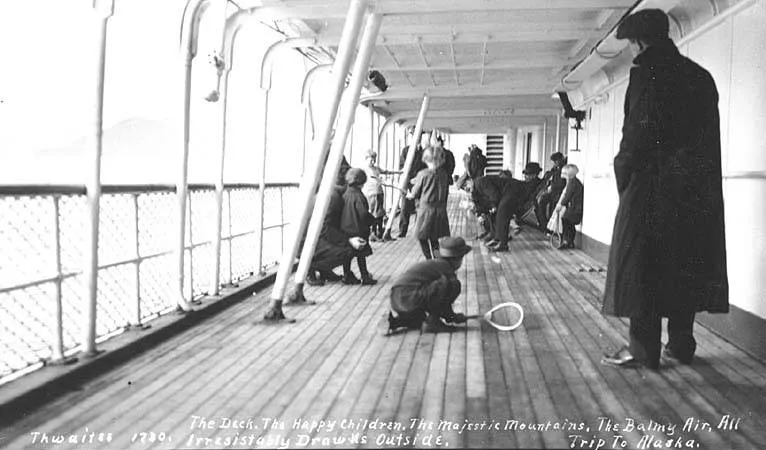
Photo: John E. Thwaites, Public domain, via Wikimedia Commons
Ask a room of American travelers what their last vacation felt like, and you'll hear the same word over and over: fast. Excursions booked months out. Ports on a schedule. The 7 a.m. lido deck scramble. We've built a whole vacation culture around seeing as much as possible while resting as little as possible.
But something is shifting. Book a slow ferry across Sahala's coastal waters these days and you'll find yourself sitting next to a couple from Portland, a solo traveler from Chicago, a retired teacher from Georgia — all of them, in their own words, "done with the cruise thing."
"I Wanted to Be Bored on Purpose"
Megan Doyle, 34, a nurse from Minneapolis, took her first Sahala overland trip last spring after a decade of cruise-based vacations. "On a ship, every day is somebody else's itinerary," she told us. "In Sahala, I missed a bus once — on purpose, honestly, because the café by the stop was that good — and it turned into the best afternoon of the trip."
Her traveling companion, Ray, 61, put it differently: "I wanted to be bored on purpose. Sit on a ferry for four hours and just look at water. Turns out that's not boring. That's what my brain had been asking for."
That's the recurring theme in nearly every conversation we've had with American slow-travel converts: the appeal isn't just what you see, it's the absence of being managed. No muster drills. No tender windows. No excursion sheet slid under your door.
Running the Numbers
Here's where the slow-travel argument gets less philosophical and more practical. A rough comparison for a 10-day trip, per person in USD:
- Caribbean cruise (mid-tier cabin, with excursions and drinks): $2,200–$3,200
- Resort week in a traditional hotspot: $1,800–$2,800
- Sahala overland circuit (ferries, buses, guesthouses, meals): $1,300–$1,900
The savings come from where you sleep (family-run guesthouses averaging $35–50) and how you move (long-distance buses for under $20 a leg, ferries for $10–30). You can absolutely spend big in Sahala. You just don't have to.
And the crowding gap is real. A popular Sahala ferry in high season might carry a hundred people. A popular cruise port discharges several thousand before lunch.
The Counterargument, Fairly Stated
Slow travel isn't for everyone, and it's worth saying plainly. Cruises and resorts handle logistics brilliantly — if you have limited time, mobility constraints, or just want zero decisions, they're genuinely good products. And overland travel in Sahala means tolerating delayed departures, variable Wi-Fi, and the occasional bus that smells strongly of durian and diesel.
The trade is simple: you give up frictionlessness and get agency.
A Starter Route for First-Timers
If you're curious but nervous, this five-stop loop is the gentle on-ramp:
- Fly into the main international gateway and spend two nights in the harbor city — easy, walkable, forgiving of jet lag.
- Take a slow ferry down the coast (3–4 hours). Book the deck seat. Bring nothing but a book.
- Overnight in the mid-size coastal town most tourists pass through. This is the move that separates slow travelers from tourists.
- Bus into the mountains for two nights. Cooler, quieter, and guesthouse dinners that cost less than airport food back home.
- Return by the inland road — a long day, but the scenery does the entertaining.
The Horizon Is the Itinerary
Nobody's claiming a slow ferry is objectively better than a cruise ship's water slide. But there's a reason the Americans we met on Sahala's roads and decks all said some version of the same thing: I finally felt like I was on vacation, not on a schedule.
The cruise ports will keep the crowds. Sahala's mountain roads and unhurried ferries are keeping something else — and more US travelers are deciding they want it.